When a Power Window Stops Working, the Glass Is Not Always the Problem
You press the switch and nothing happens. Or maybe the window starts moving, slows down halfway, tilts to one side, and then drops back into the door.
A power window that will not go up is frustrating anywhere. In Tallahassee, where a sunny afternoon can turn into a thunderstorm with very little warning, it can become a problem quickly.
The good news is that the window glass itself is often perfectly fine. The issue may be the regulator, motor, switch, wiring, or another component inside the door.
Seminole Auto Glass handles power window repair in Tallahassee, including window regulator and motor replacement. Here is a practical look at what may be happening when your car window suddenly stops cooperating.
What Does the Window Regulator Actually Do?
The regulator is the mechanism inside the door that physically moves the glass up and down.
Depending on the vehicle, it may use cables, tracks, arms, or a combination of components to support and guide the window. The electric motor supplies the power, while the regulator turns that motion into the controlled movement of the glass.
When the regulator begins to fail, the symptoms can be fairly obvious.
- The glass moves unevenly or tilts while going up.
- You hear clicking, grinding, or popping inside the door.
- The motor can be heard running, but the window does not move.
- The window suddenly drops into the door.
- The glass moves partway and then gets stuck.
That last one can be especially misleading. A window may work normally one day, struggle the next, and then fail completely.
How Can You Tell if the Power Window Motor Is Bad?
If you press the switch and hear no sound at all, the motor is one possible cause. It is not the only possibility, though. A failed switch, electrical problem, fuse, wiring issue, or broken connection can create similar symptoms.
A weak motor may also give some warning before it quits. The window may move noticeably slower than it used to, especially when going up. It might work better when the vehicle is running or operate intermittently before finally stopping.
The important point is not to diagnose the problem based on one symptom alone. A technician can remove the door panel, inspect the mechanism, test the electrical side of the system, and determine whether the motor, regulator, switch, or another part is responsible.
What if the Motor Runs but the Window Does Not Move?
This is one of the more common clues pointing toward a regulator problem.
If you press the switch and clearly hear the motor operating inside the door but the glass stays put, drops, or moves crookedly, the motor may still be doing its job while the regulator is no longer controlling the window correctly.
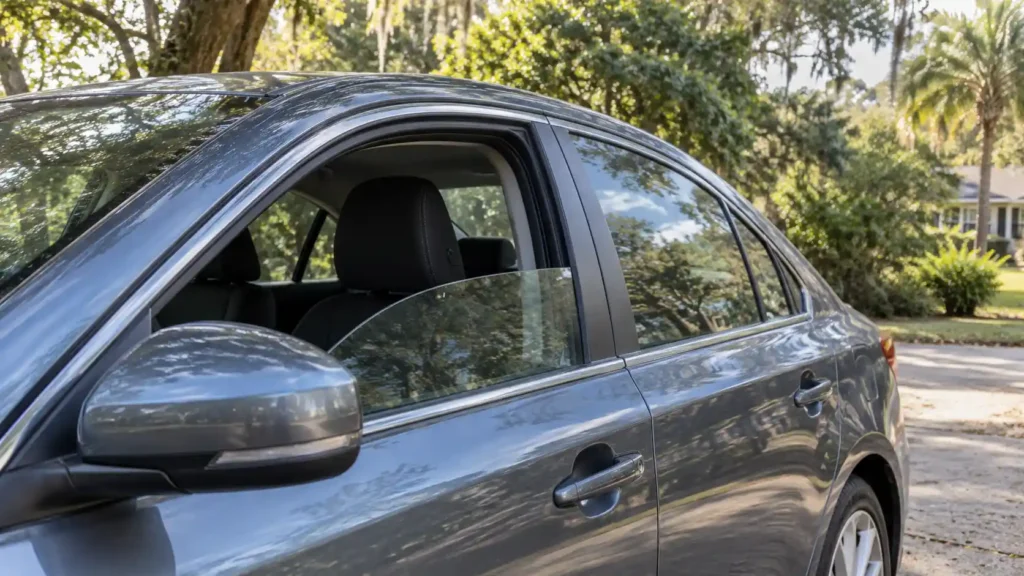
Seminole Auto Glass notes that a failed regulator cable can allow the glass to fall inside the door even though the motor can still be heard running. The damaged regulator can usually be replaced without replacing the window glass itself.
Could the Window Switch Be the Problem?
Yes. The switch is another possible failure point.
If one window does not respond from its own switch but works from the driver’s master controls, the local switch may be worth checking. If multiple windows stop working at the same time, the cause may be somewhere else in the electrical system rather than several regulators failing together.
That is why replacing parts based on guesswork can get expensive. Power-window systems involve both electrical and mechanical components, and similar symptoms can come from different failures.
Can the Glass Come Off the Track?
It can.
The window glass has to remain properly positioned as it travels through the door. A damaged regulator, worn guide, broken clip, or other hardware problem can allow the glass to tilt or move out of alignment.
You may notice one side of the glass rising faster than the other, a scraping sound, or a window that appears crooked when partially open.
If the glass is binding, repeatedly operating the switch may make the situation worse. It can place additional strain on the regulator or motor and, in some cases, put unnecessary pressure on the glass.
Should You Keep Pressing the Button?
If the window is clearly struggling, making unusual noises, or sitting crooked in the opening, repeatedly pressing the switch is usually not a productive experiment.
A regulator that is beginning to fail can sometimes move the glass a few more times before giving out completely. The problem is that the next attempt may leave the window farther down than it was before.
If the glass is already stuck in the up position, that may be inconvenient but manageable until the repair appointment. If it is stuck halfway down or inside the door, weather and vehicle security become bigger concerns.
What Should You Do if the Window Is Stuck Down?
First, avoid forcing the glass with your hands if it is loose or sitting at an angle. The mechanism inside the door may still be attached, and pulling against it can cause additional damage.
If rain is expected, a temporary covering can help protect the interior until the vehicle can be serviced. Just remember that tape and plastic are temporary measures, not a repair.
Tallahassee’s combination of heavy rain, humidity, and sudden storms makes a stuck-open window something worth addressing sooner rather than later.
What if the Window Glass Is Broken Too?
A mechanical window failure and broken glass can sometimes happen together.
If the window drops inside the door, binds badly, or is damaged during another incident, the technician may need to address both the glass and the mechanism.
Side windows are commonly made from tempered safety glass. Once that type of glass shatters, it cannot be repaired like a small windshield chip. The broken pane must be replaced, and glass fragments should be cleaned from the door cavity, tracks, seats, carpet, and surrounding trim.
Seminole Auto Glass services side windows, power windows, window regulators, motors, back glass, and other auto glass in addition to windshield work.
OEM or Aftermarket Power Window Parts?
Depending on the vehicle and availability, a repair may be completed using an OEM part or a quality aftermarket replacement.
The right choice can depend on the age of the vehicle, part availability, price, and the specific component being replaced. Seminole Auto Glass works with both OEM and aftermarket regulator and motor parts, which can provide more options when a dealership part is unavailable or does not make sense for an older vehicle.
The important thing is that the replacement part matches the vehicle and that the window moves, aligns, and seals correctly after the repair.
How Long Does Power Window Repair Take?
The repair time depends on the vehicle and what has failed. Accessing the mechanism usually requires removing the interior door panel, diagnosing the problem, replacing the damaged component, and then testing the glass through its full range of movement.
Some repairs can be relatively quick. Seminole Auto Glass has customers who have reported regulator replacements completed in roughly half an hour, although that should not be taken as a guaranteed repair time for every vehicle. Vehicle design and parts availability vary.
Power Window Repair in Tallahassee
Seminole Auto Glass has served Tallahassee drivers since 2006 and repairs power-window motors and regulators in addition to handling side glass, back glass, windshield repair, replacement, and recalibration.
The shop is located at 1500-5 Capital Circle SE in Tallahassee.
If your car window will not go up, drops into the door, moves slowly, or makes noises when you press the switch, call 850-539-4527 or request a free power-window repair quote online.
Informational disclaimer: This article is provided for general informational purposes only. Power-window systems and repair procedures vary by vehicle. A professional inspection is the best way to determine the cause of a window malfunction and the appropriate repair.