
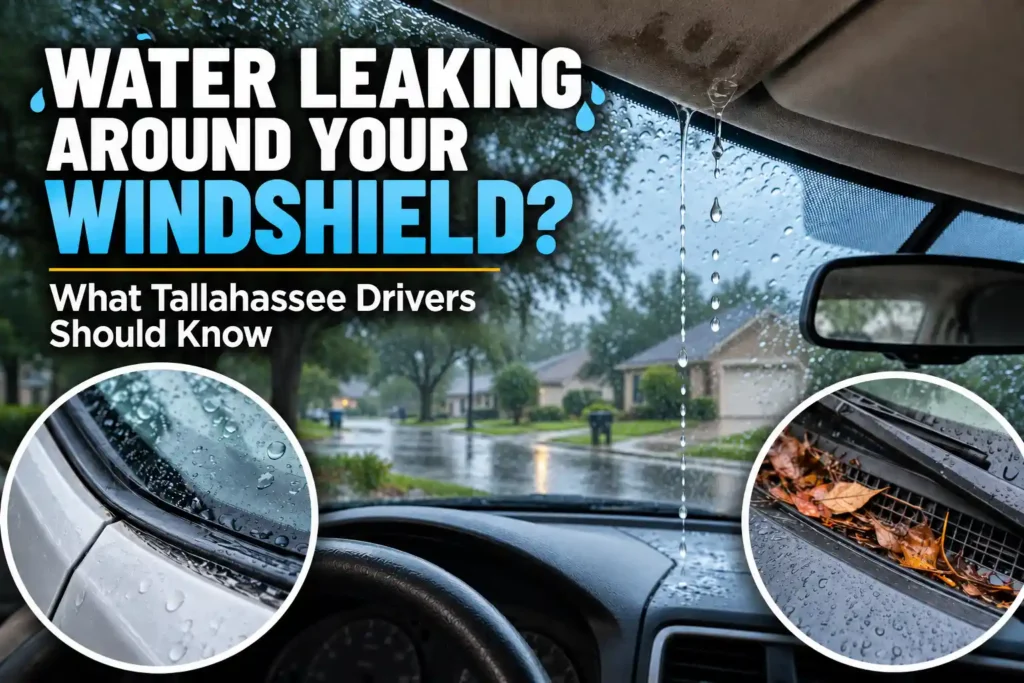
You get into the car after one of Tallahassee’s afternoon downpours and notice something that definitely wasn’t there before: a damp headliner, water running down the inside of the windshield, or a suspiciously wet spot on the floor.
Your first thought is probably the windshield.
Sometimes that’s exactly where the water is getting in. Other times, the windshield gets blamed for a leak that actually started somewhere else.
Either way, water inside a vehicle is worth investigating. A small drip has a way of becoming a much bigger nuisance after a few days of Florida rain, heat, and humidity.
What Causes Water to Leak Around a Windshield?
A windshield doesn’t rely on an ordinary rubber gasket to keep rain out on most modern vehicles. It is bonded to the vehicle with automotive urethane, creating a weather-resistant seal around the glass.
If that bond develops a problem, water may find its way inside.
A Problem With the Windshield Bond
A leak can occur if there is a gap somewhere between the windshield, urethane, and vehicle body.
This sometimes becomes noticeable after windshield replacement, but not every post-replacement leak automatically means the glass was installed incorrectly. The source needs to be identified before deciding what should be repaired.
Water can travel behind trim and interior panels before appearing somewhere completely different from where it entered.
Rust Around the Windshield Opening
The metal surrounding the windshield is sometimes called the pinch weld. Corrosion in this area can interfere with the surface the windshield adhesive needs to bond to.
Florida vehicles aren’t dealing with salted winter roads like cars up north, but they certainly aren’t immune to corrosion. Years of moisture, previous glass work, paint damage, or time spent near the coast can all contribute.
If rust is involved, simply putting sealant over the visible area may not solve the underlying problem.
Cowl and Drainage Problems
See water near the bottom of the windshield? Don’t immediately assume the windshield seal is leaking.
Leaves, pine needles, oak debris, and dirt can collect around the cowl—the area where the windshield meets the hood. Tallahassee has no shortage of tree debris, especially after windy weather or a summer storm.
Blocked drainage paths can allow water to collect where it normally wouldn’t.
Sunroof Drains and Body Seams
This one fools people all the time.
A clogged or disconnected sunroof drain can send water down an A-pillar and make it appear that the upper corner of the windshield is leaking. Roof seams, door seals, roof-mounted equipment, and other openings can create similar symptoms.
The place where you see water isn’t necessarily the place where it entered.
How to Narrow Down Where the Water Is Coming From
You can do a little detective work before scheduling service. The goal isn’t to take the car apart in the driveway. It’s simply to gather useful clues.
1. Dry Everything First
Start with a dry interior.
Use towels to dry the dashboard, headliner edge, A-pillars, floor mats, and carpeting around the suspected area. If everything is already wet, it becomes difficult to tell where fresh water first appears.
2. Look at Where the Water Shows Up
Pay attention to the first damp spot.
Water at the top edge of the windshield may suggest a different source than water appearing beneath the dashboard. Moisture running down an A-pillar may also originate above the windshield rather than through it.
Wet carpet deserves attention too. Water can travel behind the dashboard and trim before reaching the floor.
3. Check the Outside for Obvious Problems
Look around the windshield perimeter for loose molding, visible gaps, damaged trim, or signs of corrosion.
Also check the cowl area for heavy leaf buildup or debris.
Don’t start pulling molding away from the windshield. Some exterior trim is decorative, some is clipped in place, and forcing it can create another repair.
4. Try a Controlled Water Test
With someone sitting inside the vehicle, use a garden hose with a gentle stream and wet one small area at a time.
Start low and work upward gradually.
Give each section a little time before moving to the next one. If you soak the entire roof and windshield at once, you may confirm that the car leaks without learning anything about where the leak starts.
Avoid blasting the windshield edges with a pressure washer. That doesn’t reproduce normal rainfall and can force water into places it wouldn’t ordinarily reach.
5. Don’t Forget the Sunroof
If the vehicle has a sunroof and water appears near the headliner or A-pillar, mention that when having the leak inspected.
A drainage problem elsewhere in the roof can look remarkably similar to a windshield leak from inside the cabin.
Why Smearing Sealant Around the Windshield Isn’t Always the Answer
When water shows up, grabbing a tube of sealant seems like the obvious fix.
Sometimes it only hides the symptom.
If the problem involves the windshield bond, corrosion, or another part of the vehicle, applying sealant around the exterior molding may fail to reach the actual leak. It can also make proper diagnosis and future glass work more difficult.
A leak needs a source before it needs a solution.
Depending on what is found, the correct repair might involve addressing a small sealing issue, correcting another drainage problem, treating a problem around the windshield opening, or removing and reinstalling the windshield.
Those are very different repairs.
When It’s Time to Have the Leak Inspected
A little water might not seem urgent when the car still drives perfectly well, but Tallahassee weather can change that calculation quickly.
Water that repeatedly reaches the interior can soak carpeting and insulation, stain a headliner, create persistent odors, and expose electrical components to moisture.
And our climate doesn’t exactly encourage wet upholstery to dry gracefully.
If you repeatedly find water after rain, notice moisture around the windshield after a recent replacement, see visible corrosion near the glass, or can’t determine where the water is entering, it makes sense to have the vehicle inspected.
The same goes for a leak that disappears for weeks and then suddenly returns during a heavy storm. Intermittent leaks are still leaks.
Windshield Leak Help in Tallahassee
Seminole Auto Glass has served Tallahassee drivers since 2006, handling windshield repair, windshield replacement, and other auto glass problems from its shop on Capital Circle SE.
If you think your windshield is allowing water into the vehicle, don’t assume the answer is simply adding more sealant around the edge. Finding the actual source first can save a lot of frustration.
You can request an auto glass quote online, call 850-539-4527, or visit Seminole Auto Glass at 1500-5 Capital Circle SE in Tallahassee.
Keep the Rain Outside Where It Belongs
Tallahassee gives your windshield plenty of opportunities to prove whether it’s watertight. If rain keeps ending up inside the car instead of outside where it belongs, don’t keep chasing the symptom with towels and sealant.
Have the source identified. If the windshield or its installation is involved, Seminole Auto Glass can inspect the problem and help determine the appropriate next step.

